

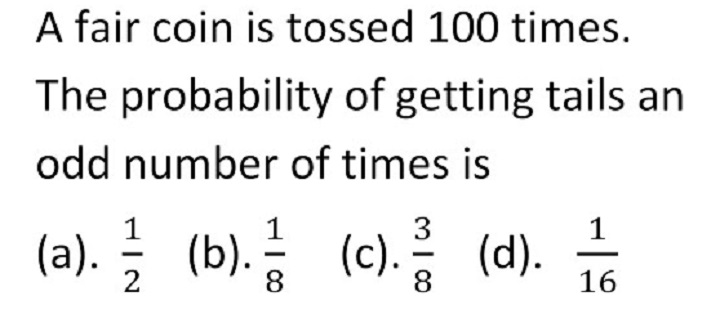
When a fair coin is tossed 100 times, you’re stepping into the world of probability, randomness, and interesting statistics. Each toss has two outcomes: Heads (H) or Tails (T), and each is equally likely. But what happens when you do it 100 times? Let’s break it down.
Understanding the Basics
A fair coin means:
- P(Heads) = 0.5
- P(Tails) = 0.5
- Each toss is independent of the previous one
Expected Outcome After 100 Tosses
If a fair coin is tossed 100 times, then:
- Expected Heads = 100 × 0.5 = 50
- Expected Tails = 100 × 0.5 = 50
But this is only an average. You might not get exactly 50 heads and 50 tails. It’s common to get results like 47H/53T or 52H/48T due to natural randomness.
Probability & Distribution
This is a classic binomial distribution scenario:
- n = 100 (number of trials)
- p = 0.5 (probability of success per trial)
Most outcomes will fall close to 50 heads, and extreme imbalances (like 90H/10T) are very rare.
What Can You Expect to See?
- Longest run of Heads or Tails? Could be 6–8 in a row
- Rough balance between both outcomes
- Interesting patterns like HTHTHT or HHHTTT may appear
- About 68% of the time, results will be between 45 and 55 heads
Fun Things to Try with 100 Tosses
🎲 Record each outcome to create a data table
📊 Plot a graph showing heads vs. tails over time
🧮 Calculate the longest streak of heads or tails
🎮 Simulate it using a Python or Excel script for fun experiments
💡 Tip: The more tosses you do, the closer you get to 50% heads and 50% tails overall, thanks to the Law of Large Numbers